Recycling and Sustainability for Gardening Walthamstow
At Gardening Walthamstow we are committed to creating an eco-friendly waste disposal area and a truly sustainable rubbish gardening area that supports local biodiversity and reduces landfill. Our approach combines community action, practical infrastructure and clear targets. We emphasise low-impact operations and responsible separation of garden waste to help Walthamstow and the wider borough meet climate goals.
 Our work is aligned with the borough's approach to waste separation — keeping green/food waste, dry recycling and residual waste distinct — and we build on these systems locally. We promote an eco waste disposal for gardens model that prioritises composting, mulching and local processing, reducing haulage and emissions.
We have set a clear recycling percentage target: a progressive aim to hit a 70% recycling and composting rate for garden-related waste across our schemes by 2030. This target guides our day-to-day activities, from collection to community education and helps justify investment in low-carbon logistics and local treatment facilities.
To deliver that target we work with nearby transfer stations and depots. Local transfer stations we frequently use include Leyton Transfer Station and nearby Edmonton facilities, allowing short, efficient journeys and better material sorting. Using local transfer hubs shortens route distances and supports our sustainable garden waste area objectives.
Practical recycling activities in the borough
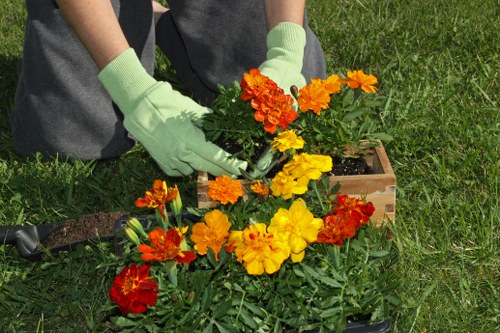
Gardening Walthamstow encourages a range of recycling activities tailored to urban gardens and allotments. Typical activities include:- Green waste composting: turning prunings, leaves and soft plant material into rich compost for local use.
- Wood and bulky garden waste: chipping and reusing as mulch or biomass feedstock.
- Containers and plastic pots: collecting and sorting for municipal recycling streams where accepted.
We also support small-scale chemical-free pest control and promote the reuse of pots, seed trays and tools to cut down on single-use garden plastics. Our sustainable rubbish gardening area concept favours repair, reuse and recycle over disposal.
Partnerships with charities and community groups
Partnerships are central to our scheme. We collaborate with local charities and not-for-profits — including community allotments, food-growing projects and environmental charities — to redistribute usable materials, garden tools and compost. Working together helps unlock volunteer labour, provides training opportunities and routes usable items back into community use rather than the waste stream.Examples of partnership activities include tool libraries, donated compost for community plots, and coordinated collection events with neighbourhood organisations. These partnerships allow us to divert a large portion of garden waste from landfill and to channel resources where they benefit the most people and local greenspaces.
To ensure low-carbon operations we invest in a fleet of low-carbon vans. Our collection services use a mix of electric vans and modern hybrid vehicles, with route planning optimised to reduce mileage and idle time. Charging infrastructure is prioritised near transfer stations so that our eco-friendly waste disposal area remains genuinely low-emission.
We also monitor carbon footprints for major tasks: chipping, hauling and composting. Choosing local transfer stations and on-site processing reduces heavy-haul journeys; a key part of our sustainable rubbish gardening area strategy is to keep materials processing within or very near the borough.
To support residents and local gardeners, we provide clear signage and bin labelling at community hubs and allotments. Simple instructions on separating green waste from dry recyclables and non-recyclable refuse increase participation and improve the quality of materials sent for composting. Better separation at source raises the effective recycling rate and helps meet our 70% goal.
We also run seasonal collection drives for bulky garden waste, coordinating drop-offs at local transfer points and offering scheduled pick-ups with our low-emission vehicle fleet. These events prevent fly-tipping, encourage proper sorting and create feedstock for community composting operations and larger-scale green waste processors.
 Our monitoring includes regular audits of material streams, reporting on diversion rates and sharing progress with partners. Transparent measurement keeps the project accountable and highlights areas where extra community engagement or infrastructure investment is needed.
 Looking forward, Gardening Walthamstow aims to expand its network of eco-friendly garden waste hubs across the borough, deepen charity partnerships and gradually electrify more of our fleet. By combining practical onsite recycling, local transfer station use, collaborative charity work and low-carbon vans we can achieve a resilient, sustainable rubbish gardening area that benefits people and wildlife alike.
We invite community groups and local gardeners to join this green transition: reduce waste, compost what you can, donate usable tools, and support local recycling hubs. Collectively we can reach our recycling percentage target and create a cleaner, greener Walthamstow for future generations.
Gardening Walthamstow champions practical, verifiable steps toward a low-waste future: local processing, charity partnerships, and greener logistics at the heart of a sustainable borough.